Portfolio
NIPI | Norway India Partnership Initiative
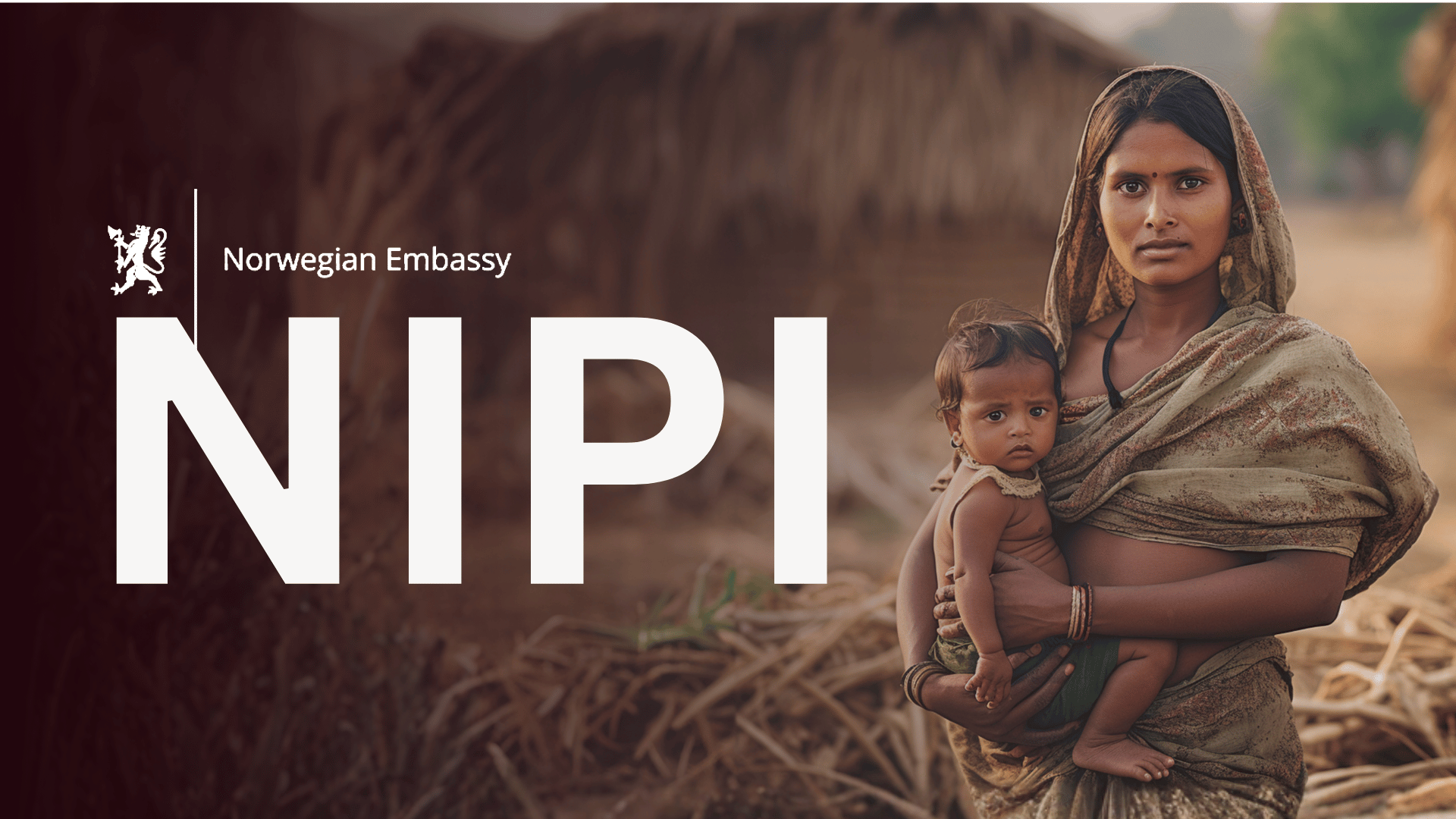
Some stories carry more than a brief. GBP was selected through competitive tender to document the Norway India Partnership Initiative, we were being asked to do something that public health reporting often fails to do: go beyond the policy and find the people.
NIPI is a bilateral agreement between the Governments of Norway and India, channelled through India's National Rural Health Mission across four high-focus states -- Bihar, Odisha, Madhya Pradesh, and Rajasthan. Since its founding in 2006, the initiative has worked to reduce maternal, newborn, and child mortality through scalable innovations, health worker training, and strengthening the continuum of care from community to facility. By the time GBP was brought in, NIPI had already quietly changed the calculus of maternal health across some of India's most under-resourced regions.
GBP's job was to find the human story inside all of that.
GBP was commissioned to create a main long-format documentary alongside a suite of social media short films covering the on-the-ground work of NIPI and its implementing partners, including the Jhpiego team operating in Madhya Pradesh.
Jhpiego, an affiliate of Johns Hopkins University, had been working alongside NIPI to build the clinical competency of frontline health workers -- the nurses, midwives, and community health officers who are often the first and only point of care for women in rural communities. Their work was painstaking, unglamorous, and enormously consequential. It was exactly the kind of story that rarely gets told well.
Led by Listening
Before any camera rolled, GBP invested time understanding the specific context of each community, the distinct roles of health workers at different levels of the system, and the lived experience of the women at the centre of it all. Development communication done well starts with deep listening. The story structures came from what we heard in the field, not from what was written in the brief.
Two Formats, Two Purposes
GBP produced the project across two distinct formats designed to serve different audience needs.
The long-format documentary built the full picture -- the history of the partnership, the scope of the challenge, the mechanisms of change, and the faces behind the statistics. It was made for stakeholders, institutional partners, government counterparts, and anyone who needed to understand what NIPI actually represented.
The social media short films were cut for reach and emotion. Each one was designed to function as a standalone story -- complete, shareable, and human -- while also belonging to a larger series. The titles themselves tell you the editorial approach:
Home is Where the Heart is
Florence Nightingales
It's All in the Family
A Stitch in Time Saves Nine
Each title carries a different entry point into the same underlying truth: that maternal and newborn health in rural India is not a policy problem to be solved from the top down. It is a community reality that changes one relationship, one health worker, one family at a time.
Letting the Subject Lead
The women, health workers, and community members in these films are not backdrops for institutional messaging. They carry the narrative. GBP's production approach consistently prioritised authentic voice over curated statement, which is what separates development communication that resonates from development communication that reports.
NIPI has now completed three full phases and entered a fourth, with the Government of India scaling up 10 of the 11 innovations it piloted. The evaluation of its work found something rare for a development initiative: Indian counterparts described NIPI as a partner that supported without imposing, that invested without dictating.
GBP's films were made in the same spirit. They do not tell communities what their lives mean. They give those communities space to show it.